
Garage Storage Guide
Garage workbench hardware planning guide.
Plan the drawer slides, folding brackets, pull-out trays, shelf supports, wall backing, and fasteners that make a garage work zone compact, strong, and easy to use.
Short answer
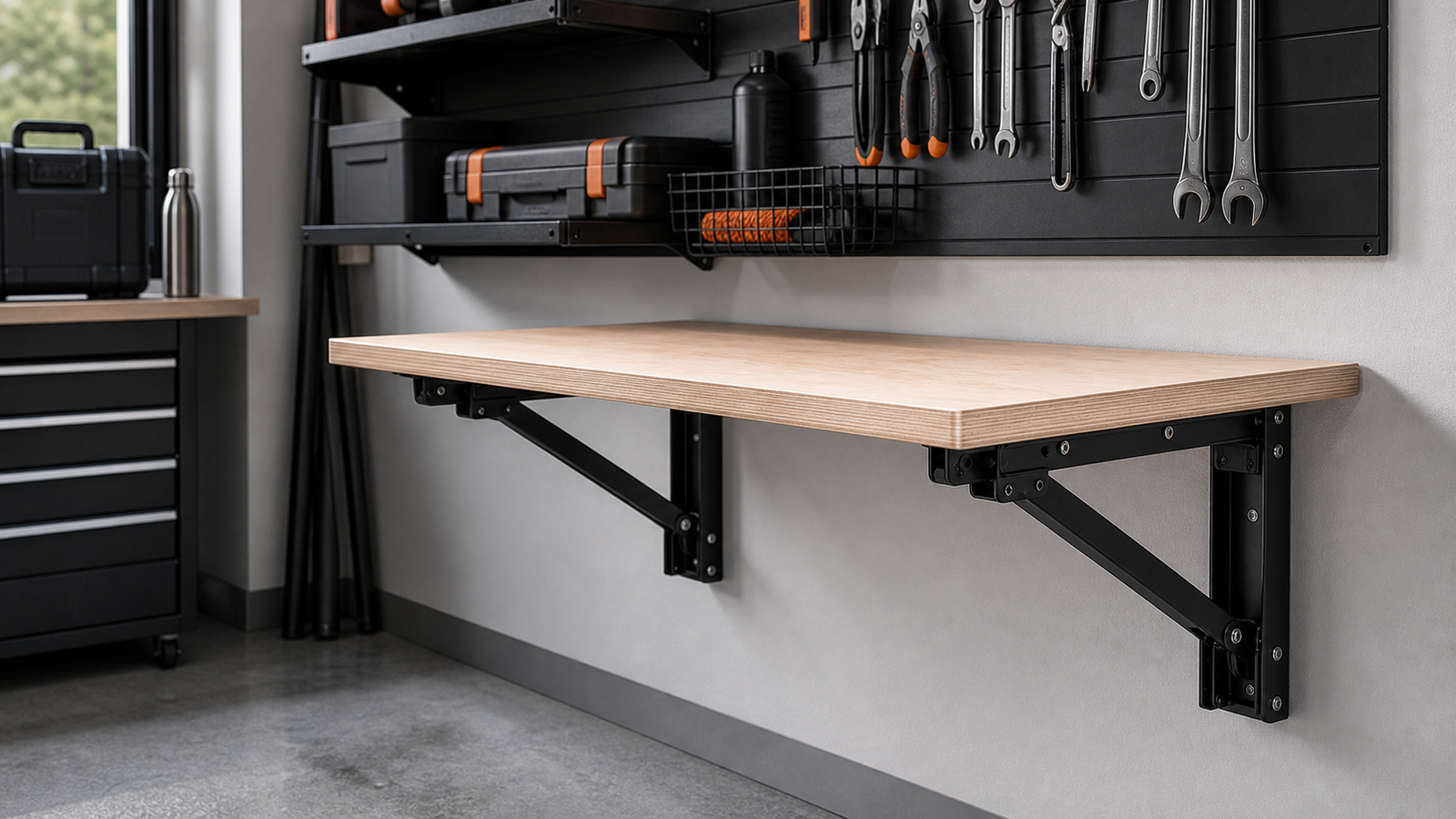
Start by separating the garage build into work surfaces, tool drawers, pull-out trays, and fixed storage. Use folding shelf brackets for fold-down worktops, heavy-duty locking slides for loaded tool trays, and bottom-mount slides for compact utility shelves.
Choose hardware by job
A garage system often mixes several hardware types. The mistake is trying to make one product solve every movement. A workbench needs support against downward force. A tool drawer needs controlled travel. A cleaning-supply tray needs compact bottom support.
What to measure before ordering
- Wall structure, stud spacing, masonry type, or backing board thickness.
- Workbench depth, shelf depth, and folded clearance.
- Tool drawer width, slide clearance, load, and release access.
- Cabinet opening width, depth, hinge interference, and tray height.
- Fastener length and head clearance for each hardware family.
- Where the user stands when pulling, folding, loading, or working.
Plan the load path
In a garage, the weak point is often not the bracket or slide. It is the wall, cabinet side, shelf board, drawer box, or fastener pattern. Before increasing hardware capacity, make sure the structure around it can transfer the load cleanly.
For work surfaces, read folding shelf bracket weight capacity. For loaded pull-outs, start with load rating.
Common garage hardware mistakes
COREAX product match
Use COREAX folding shelf brackets for fold-down work surfaces, COREAX heavy-duty locking drawer slides for tool trays, and COREAX bottom-mount slides for compact utility pull-outs.
View Folding Shelf BracketsMove to the next decision.
Use the next guide in the same planning path, then verify the exact product before ordering.