
Laundry and Utility Pull-Out Planning
Laundry room pull-out shelf slides: how to plan detergent, cleaning-supply, and utility trays.
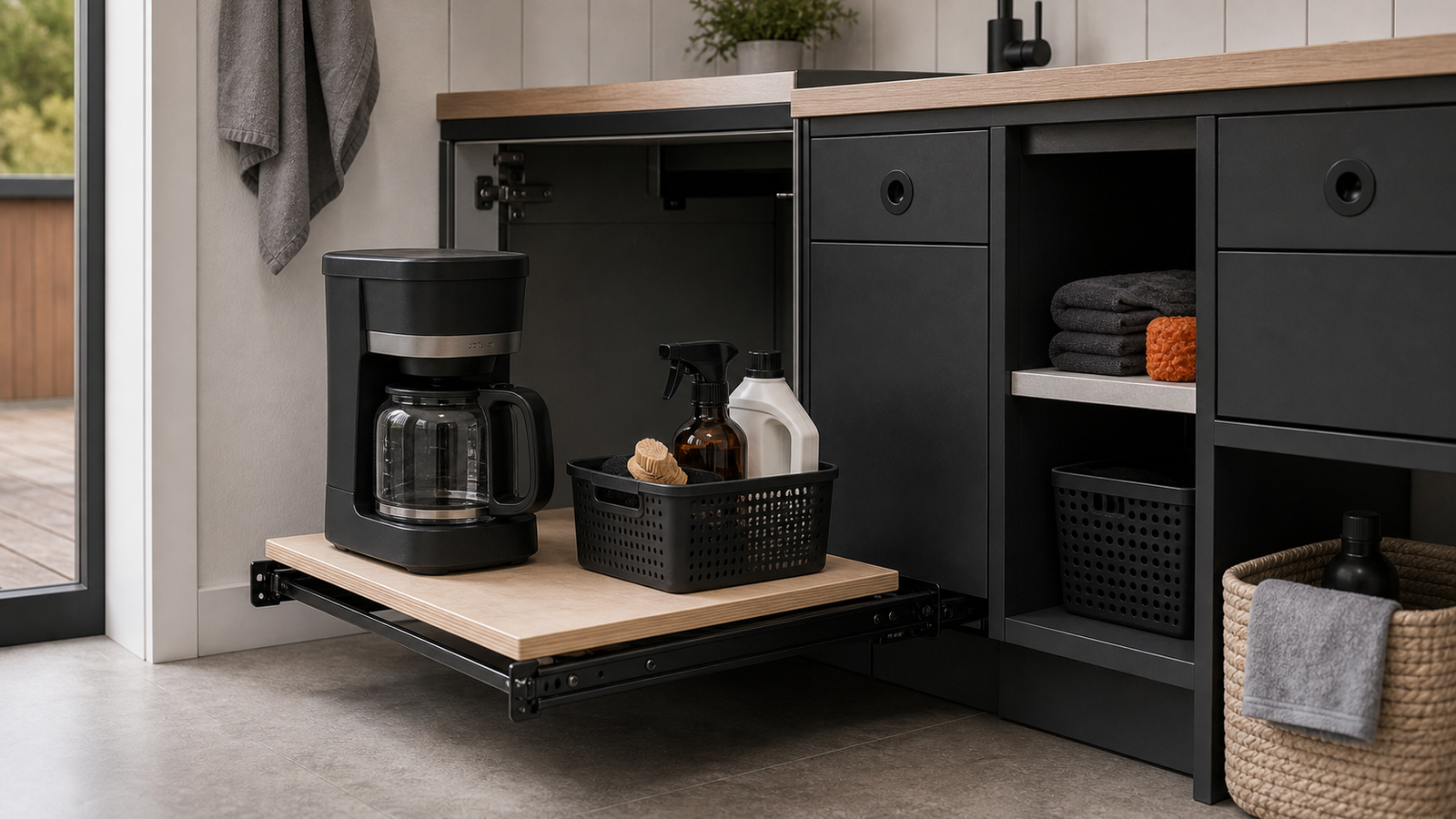
A reliable laundry or utility-room pull-out starts with the clear cabinet opening, usable depth, full liquid-container weight, tray stiffness, hinge and plumbing clearance, and a surface that can be cleaned after spills. For compact bottom-supported trays, COREAX true bottom-mount soft-close slides are the relevant product family; they are not a substitute for heavy-duty vehicle slides or a conventional concealed drawer-box system.
- Published by
- COREAX
- Technical review
- COREAX Product Support
- Published
- Updated
Direct answer
Choose the slide only after measuring the bottles, cabinet, and moving load.
Bottom-mount soft-close slides can work well for laundry detergent trays, cleaning-supply pull-outs, baskets, and compact utility cabinets when the shelf is supported from below and the cabinet base is rigid. Measure the clear opening with the door and hinges installed, use the shortest unobstructed cabinet depth, count full liquid containers as part of the working load, and leave enough vertical space to lift the tallest bottle over the tray lip.
The shelf should be stiff enough to remain flat across its width. A slide can move smoothly while empty and still bind after detergent, bleach, cleaners, or a laundry basket are added if the shelf flexes or the cabinet floor twists. Build the pull-out as a system rather than treating the slide rating as the only design input.
Measurement worksheet
Record these seven dimensions before choosing a tray or slide.
Load planning
Liquids create denser loads than an empty storage plan suggests.
Detergent, bleach, fabric softener, stain remover, and bulk cleaning products can make a small cabinet surprisingly heavy. The correct number is the heaviest realistic arrangement, not the weight of the shelf when the bottles are half empty. Also count refill containers stored behind the daily-use bottles and any removable bin placed on the tray.
Load position matters. Tall, heavy bottles concentrated at the front edge increase shelf deflection and can make a soft-close mechanism feel uneven. Keep the heaviest containers closer to the rear or center when practical, use dividers so they cannot tip during movement, and test the tray gradually with the actual products before treating the installation as complete.
COREAX bottom-mount slides are cataloged for compact bottom-supported pull-outs with up to 88 lb listed support. That specification does not prove that an 88 lb finished shelf is suitable in every cabinet. The shelf board, cabinet floor, mounting screws, rail spacing, and installation accuracy still control the completed system.
Tray design
Use a low, stiff, cleanable tray rather than a tall box by default.
A low tray keeps bottles visible and allows them to be lifted out without wasting vertical space. A small perimeter lip helps contain minor drips, but an unnecessarily tall side can block spray triggers, make cleaning harder, and require more vertical clearance. Rounded or sealed edges are easier to wipe than exposed raw board.
For an open shelf without conventional drawer sides, review the bottom-supported load-path requirements. The shelf must transfer load into the rails without twisting, and the two mounting lines must remain parallel through full travel.
Cabinet obstacles
Most failed laundry pull-outs are blocked by something other than the slide.
- 01Open the door to its real stop.
Check whether the hinge, handle, adjacent wall, washer, dryer, or countertop prevents the opening from becoming fully clear.
- 02Measure at the planned rail height.
Cabinet openings can taper. Measure front, middle, and rear where the moving shelf will actually pass.
- 03Map every rear obstruction.
Hoses, valves, outlets, drain fittings, and recessed panels can shorten usable rail depth even when the cabinet appears deep enough.
- 04Test bottle removal.
Place the tallest container on a mock shelf and confirm it can be lifted over the tray lip without striking the cabinet top.
- 05Preserve service access.
Confirm the completed tray can be removed or moved far enough to reach shutoffs and connections.
Movement choice
Soft-close improves daily use, but it is not a cure for poor alignment.
Soft-close is useful in a laundry or utility cabinet because bottles and spray containers are less likely to strike one another during the final closing movement. It also reduces slamming in frequently used household storage. The damping mechanism still depends on square, parallel installation and a tray that stays flat under load.
If the shelf closes well when empty but stops short with full bottles, inspect shelf sag, rail spacing, screw interference, and cabinet-base movement before blaming the damper. Do not lubricate or modify a damping mechanism unless the product instructions permit it. For cabinet-specific troubleshooting, see why pull-out shelves bind or sag.
Common mistakes
Correct these before final drilling.
Full liquid containers can create a much denser working load than the first layout suggests.
A shelf sized to the cabinet interior can strike the hinge or fail to clear the door opening.
A thin or wide tray can sag and move the rail mounting lines out of alignment under load.
A storage improvement should not make water, drain, power, or appliance connections inaccessible.
Detergent and cleaner spills can swell unfinished board and loosen fastener areas.
Final-tightening every screw before checking full travel can lock small alignment errors into the installation.
Evidence and limits
What the planning method is based on.
Manufacturer guidance + COREAX product dataDrawer-slide manufacturers consistently treat load, rail alignment, drawer or shelf construction, and mounting conditions as a system. COREAX product data supplies the dimensions, mounting type, soft-close function, and listed load support for the current bottom-mount family. The external references below support the general measurement and load-planning principles; they do not certify a specific COREAX laundry installation.
- Accuride: determining drawer-slide load ratingManufacturer explanation of counting the complete moving load and considering application conditions.
- Blum: drawer planning and measurementManufacturer planning example showing why cabinet dimensions and the exact slide system must be resolved before drawer construction.
Evidence boundary: This guide is a planning and fit resource, not a laboratory capacity report, plumbing standard, or approval for a particular cabinet. Use the purchased product specification, suitable cabinet materials and fasteners, and gradual loaded testing. Keep water shutoffs, drains, outlets, and appliance connections accessible.
COREAX product path
Use the bottom-mount family for compact household pull-outs.
COREAX black bottom-mount soft-close slides are intended for bottom-supported shelves and trays in compact cabinets. Current nominal sizes run from 10 to 20 inches with up to 88 lb listed support. Confirm the actual closed length, tray structure, cabinet depth, mounting method, and loaded movement before drilling.
Common questions
Laundry and utility pull-out FAQ
What type of drawer slide works for a laundry pull-out shelf?
A bottom-supported slide system is a practical choice for a compact open tray when the shelf is stiff, the cabinet base is structural, and the stored load fits the exact product conditions. Measure the opening, depth, hinges, and full container weight before choosing.
How much weight should I count for detergent storage?
Count the tray, dividers, hardware, every container at its fullest expected condition, and any basket or tool stored on the shelf. Do not calculate from empty packaging or the average half-used load.
Should a laundry pull-out have tall sides?
Usually a low lip is easier for bottle access and cleaning. Use enough edge height to reduce tipping or contain minor drips, but keep adequate vertical room to lift out the tallest bottle.
Can a pull-out cover water valves or appliance hoses?
It should not make shutoffs, drains, outlets, filters, or appliance connections inaccessible. Plan a removal or service path and verify it before final installation.
Absorbed the former utility-room pull-out topic, added a seven-measurement worksheet, full-liquid load calculation, tray and spill planning, service-access checks, model-specific COREAX boundaries, manufacturer sources, and four-question FAQ.
Move to the next decision.
Use the next guide in the same planning path, then verify the exact product before ordering.