
Appliance Tray Guide
Appliance pull-out tray hardware guide.
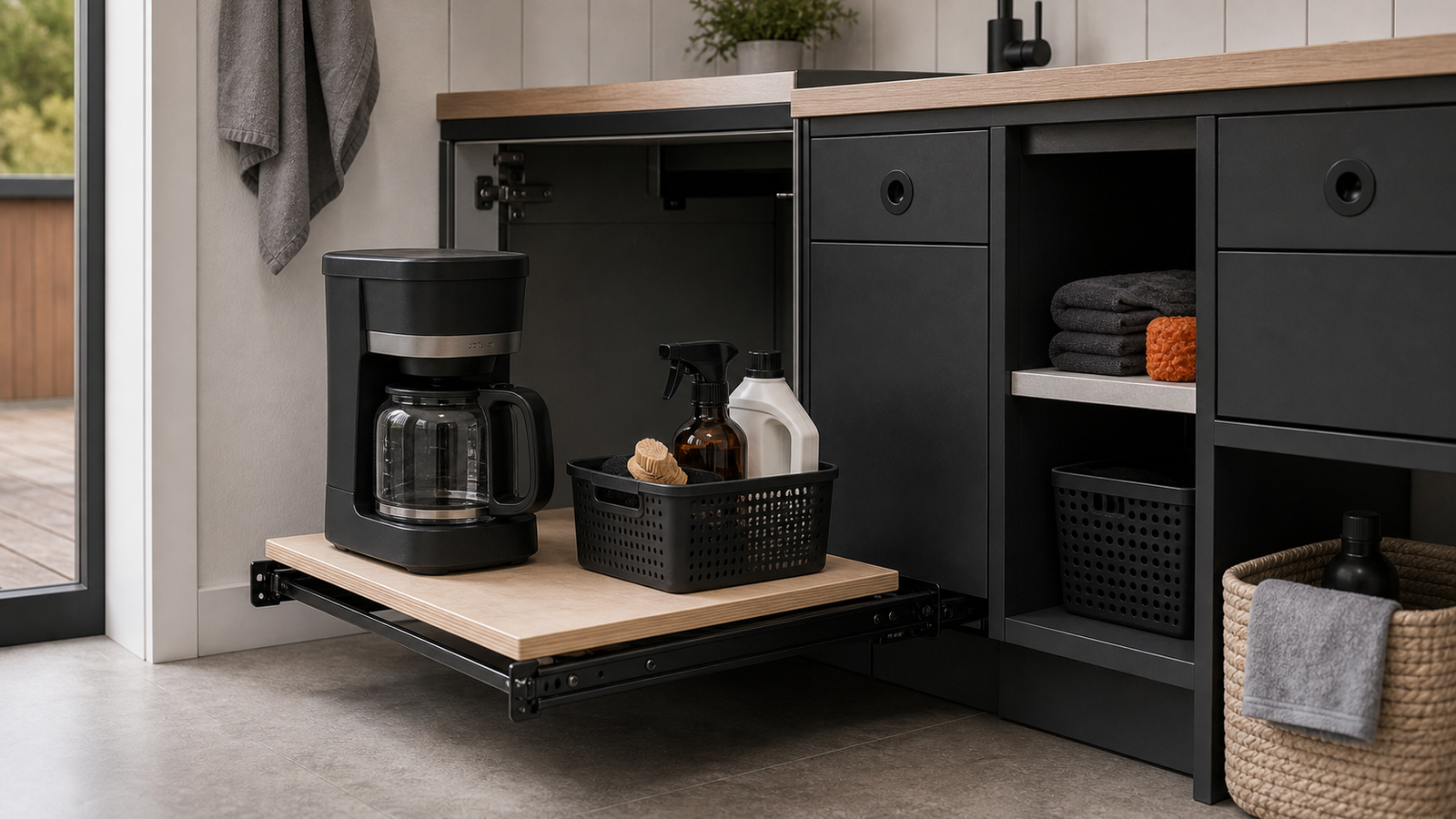
Small appliances are easier to use on pull-out trays, but the tray hardware must handle appliance weight, cord clearance, ventilation, shelf stiffness, and front-edge leverage.
Short answer
Use bottom-mount slides for compact appliance trays when the appliance sits on a flat shelf and the load stays within the slide, shelf, and cabinet structure limits. Check appliance weight, tray weight, cord path, heat, ventilation, and clearance before installation.
Appliance trays need more than slide capacity
A coffee maker, mixer, printer, air fryer, or small utility appliance can be heavy and front-loaded. The slide may be strong enough, but the shelf board or cabinet base can still flex when the tray is fully extended.
Before installing an appliance tray
- Appliance footprint, loaded weight, and operating clearance.
- Tray board thickness, stiffness, lip height, and finish.
- Cabinet opening, depth, vertical height, and door swing.
- Power cord route and whether the cord moves with the tray.
- Ventilation and heat clearance for powered appliances.
- Whether the appliance will be operated on the tray or only stored there.
Storage tray vs working tray
A tray used only for storage can be simpler. A tray used while the appliance is running needs more care: cord strain relief, heat clearance, drip cleanup, vibration, and stability at full extension. If the appliance is heavy or creates force during use, keep the working load closer to the cabinet or reinforce the shelf.
For shelf stiffness issues, read why pull-out shelves bind or sag.
Common appliance tray mistakes
COREAX product match
COREAX bottom-mount drawer slides fit bottom-supported appliance trays, coffee maker shelves, printer trays, and compact pull-out platforms when the shelf and cabinet are properly built.
View Bottom-Mount SlidesMove to the next decision.
Use the next guide in the same planning path, then verify the exact product before ordering.