
Kitchen Pull-Out Guide
Kitchen pull-out shelf hardware guide.
Choose kitchen pull-out shelf hardware by cabinet opening, shelf load, hinge clearance, tray stiffness, soft-close expectations, and how the shelf will be used every day.
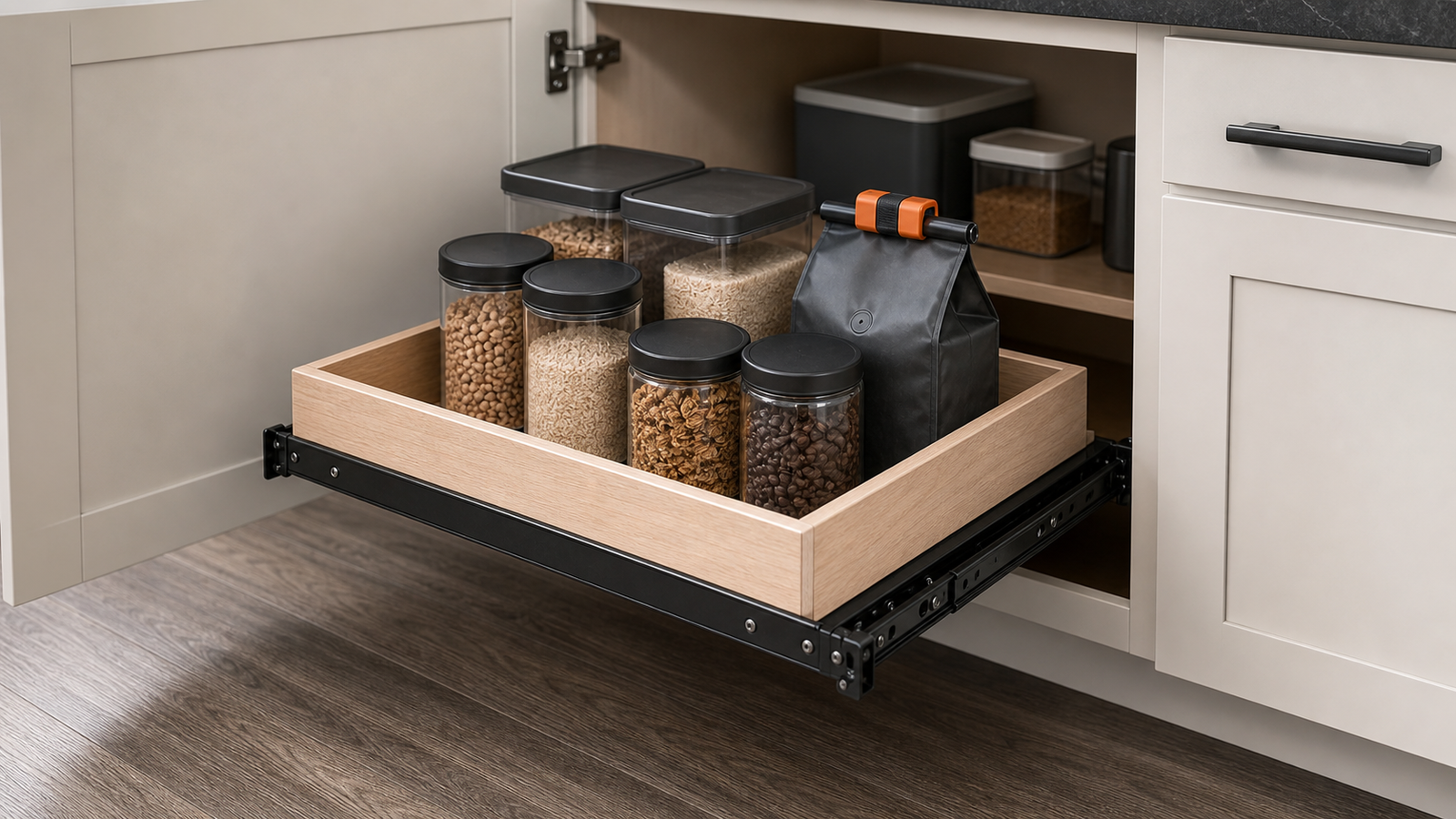
Short answer
Use bottom-mount slides for kitchen pull-out shelves when the shelf is open, compact, and bottom-supported. Plan the shelf as a tray system: slide, shelf board, lip, fasteners, cabinet base, load, and clearance all matter.
Common kitchen pull-out types
Kitchen pull-outs see repeated use, so smooth movement and predictable alignment matter more than clever storage alone.
Kitchen measurement checklist
- Clear opening width with hinges and face frame included.
- Cabinet depth to the rear wall, pipes, outlet, or obstruction.
- Maximum item height when the shelf is loaded.
- Tray width, lip height, and shelf board thickness.
- Loaded weight of pantry items, cookware, trash, or appliances.
- Whether soft-close is desired and whether a latch is needed.
Soft-close is useful, not magic
Soft-close can make a kitchen pull-out quieter, but it will not fix a sagging shelf, crooked rail spacing, screw interference, or a cabinet base that flexes. Build the shelf flat and stiff first, then choose soft-close if quiet final travel matters.
Related guide: soft-close bottom-mount drawer slides.
Common kitchen pull-out mistakes
COREAX product match
COREAX bottom-mount drawer slides support kitchen pull-out shelves, pantry trays, trash pull-outs, cookware shelves, and compact appliance platforms.
View Bottom-Mount SlidesMove to the next decision.
Use the next guide in the same planning path, then verify the exact product before ordering.