
Soft-Close Guide
Soft-close bottom-mount drawer slides guide.
Soft-close bottom-mount slides can make pull-out shelves, pantry trays, and trash cabinets quieter, but they still need correct alignment, load planning, and a stiff shelf. This guide explains what soft-close can and cannot solve.
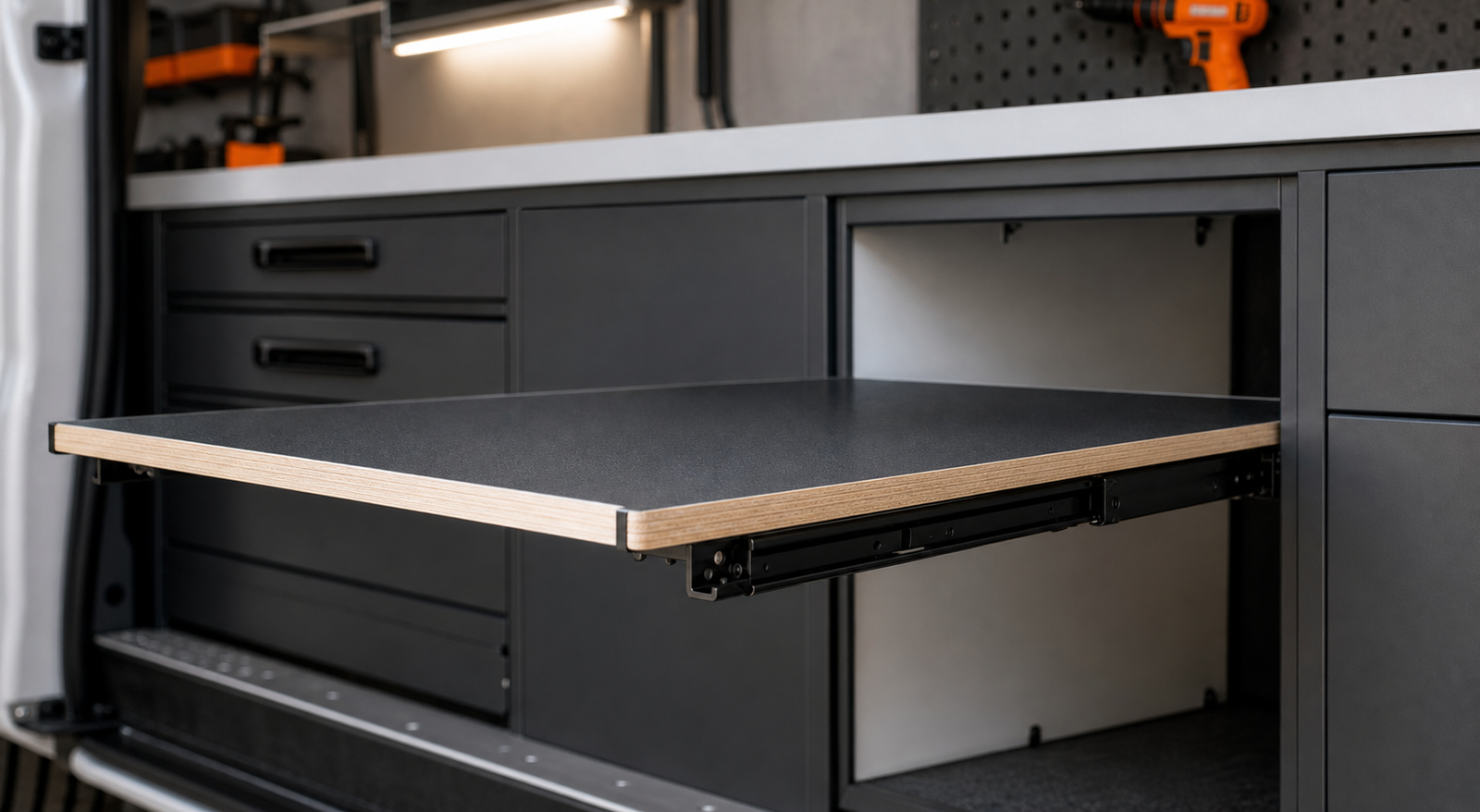
Quick answer
Soft-close bottom-mount slides are useful when a shelf or tray should close quietly and feel controlled near the end of travel. They do not compensate for poor rail alignment, weak shelf material, overloaded trays, or cabinet interference.
What soft-close actually does
Soft-close mechanisms slow the final part of the closing motion and pull the shelf into its closed position. This is helpful for kitchen cabinets, bathroom storage, pantry trays, and RV interiors where slamming is annoying or can move stored items.
The mechanism is not a structural brace. If the shelf sags, rubs, or twists, the soft-close action may feel weak or inconsistent because the rails are already fighting alignment or load problems.
Best uses for soft-close bottom-mount slides
Why soft-close may feel hard to open
Some resistance at the start of opening can be normal because the mechanism has pulled the shelf closed. But excessive force usually points to alignment, load, or friction. Check that both rails are parallel, screws are not rubbing, and the shelf is not sagging when loaded.
If the problem appears only after loading the shelf, read Why Pull-Out Shelves Bind or Sag.
COREAX product match
COREAX undermount drawer slides suit soft-close bottom-supported cabinet pull-outs where the shelf, tray, and cabinet structure are planned together.
View Undermount Drawer SlidesFAQ
Are soft-close bottom-mount slides worth it?
They are worth it when quiet closing and controlled final travel matter, especially in kitchens, pantries, bathrooms, and compact living spaces.
Can soft-close fix a sagging shelf?
No. Shelf stiffness, load distribution, and rail alignment must be correct first.
Why does soft-close feel stiff?
Some opening resistance can be normal, but heavy stiffness may come from misalignment, screw interference, excessive load, or shelf flex.
Move to the next decision.
Use the next guide in the same planning path, then verify the exact product before ordering.