
Drawer Slide Fit Guide
How to measure for drawer slides before ordering.
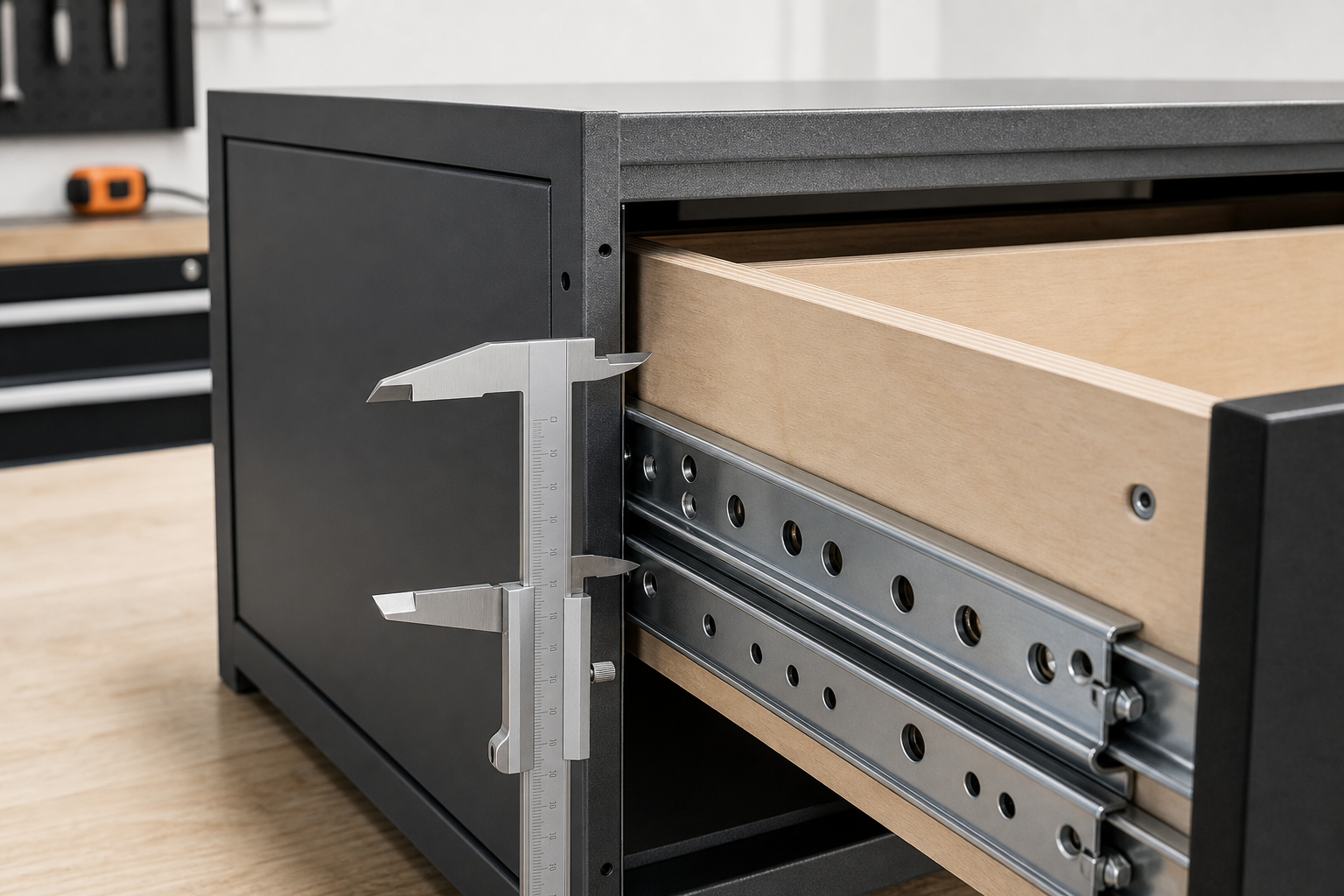
Measure usable depth, drawer width, side clearance, loaded weight, extension path, and release access before choosing drawer slides. A few minutes with a tape measure can prevent binding, weak support, and wrong-size hardware.
Your measurement record
Label every measurement with its unit. Include the drawer or tray itself in the loaded weight. Leave unknown measurements blank until checked.
Use your browser’s Print command to keep a copy before leaving this page.
Quick answer
Measure the closed depth first, then measure the drawer or tray width after slide clearance. Confirm the load, the full-extension travel path, fastener access, and whether the release lever can be reached once the drawer face or tray front is installed.
The six measurements that matter
Measure closed depth first
Closed slide length is the first hard limit. Measure from the front mounting reference to the rear obstruction with the drawer closed. In a cabinet, that may be the inside back panel. In a truck bed drawer, it may be the rear frame, tailgate clearance, or a cross brace.
Choose a slide length that fits this usable depth. If the exact depth falls between available sizes, the safer choice is usually the next shorter slide, not a longer slide that has to be forced into the opening.
Calculate drawer width after slide clearance
For side-mount slides, measure the thickness of one slide and leave that space on each side of the drawer. The simple planning formula is: clear opening width minus left slide thickness minus right slide thickness, then adjust for the tolerance your slide and build accuracy require.
If the drawer is too wide, the rails can pinch and bind. If it is too narrow, the drawer can twist, rattle, or feel loose under load. See the drawer slide side clearance guide for a deeper clearance checklist.
Check the load as installed
Load is not just the item sitting in the drawer. Count the drawer box, tray panel, hardware, cargo, tools, fridge, battery, or appliance. Also consider where the weight sits when the drawer is fully extended. A front-heavy tray puts more stress on the slide, frame, and fasteners.
For more detail, compare this article with the drawer slide load rating guide and the load rating resource.
Dry-fit before drilling final holes
- Mark the slide position on both sides before fastening.
- Confirm the rails are parallel from front to rear.
- Test screw head clearance before fully tightening.
- Open the drawer through its full path and check for door or tailgate conflicts.
- Test the release lever and lock access with the drawer front in place.
- Add load gradually and re-check movement before final use.
COREAX product match
Choose COREAX heavy-duty drawer slides for side-mount full-extension trays that need lock-in, lock-out, and single-side release. Choose COREAX undermount drawer slides for bottom-supported pull-out shelves in compact cabinets.
View Heavy-Duty Drawer SlidesFAQ
Should drawer slides be the same length as the drawer?
They are often close to the drawer depth, but the important limit is usable closed depth. The slide must fit the cabinet or frame without hitting the rear structure.
How do I measure drawer slide side clearance?
Measure the clear opening, measure one slide thickness, subtract both slide thicknesses from the opening width, then leave the tolerance needed for smooth movement and fastener clearance.
Do I measure load before or after building the drawer?
Estimate load before ordering, including the drawer or tray itself. After assembly, test with real load gradually before treating the installation as finished.
Move to the next decision.
Use the next guide in the same planning path, then verify the exact product before ordering.